Commercial kitchen sanitation pest defense stops vector infestations by neutralizing the organic substrate that sustains insect breeding cycles under cooking lines. In facilities across dense Pittsburgh dining…
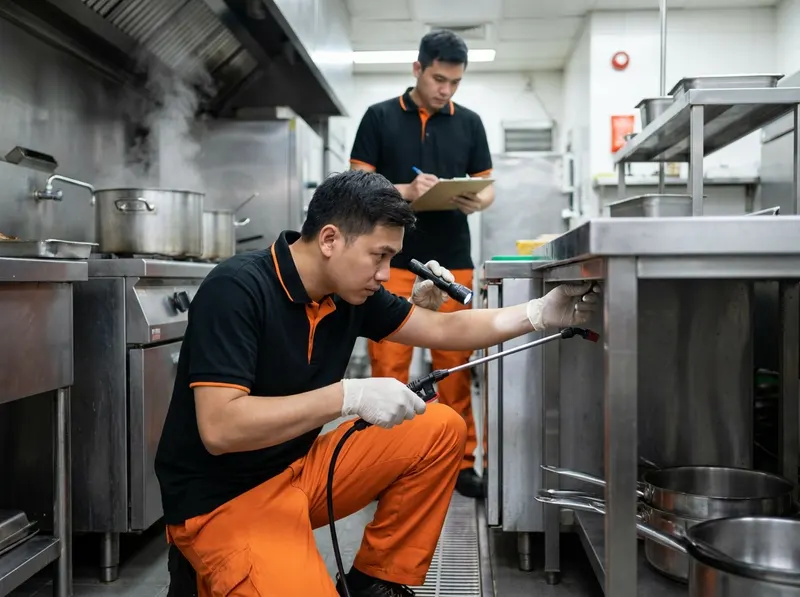
Commercial kitchen sanitation pest defense stops vector infestations by neutralizing the organic substrate that sustains insect breeding cycles under cooking lines. In facilities across dense Pittsburgh dining corridors such as East Liberty, Lawrenceville, and the South Side Flats, residual fryer oil, floor drain sediment, and trapped flour under low-boy refrigeration units provide continuous sustenance for pests even after surface mop routines are complete. This program applies enzymatic biological foam into floor troughs, floor sinks, and wall-junction cracks to digest grease loads where chemical sprays fail to penetrate. Food-grade non-repellent formulations combined with insect growth regulators halt reproduction cycles without contaminating open food preparation surfaces or stainless steel prep counters.
Structural exclusion establishes a physical barrier against rodent pressure, which increases significantly in older Allegheny County commercial spaces built with brick foundations and shared party walls. Technicians seal 1/4-inch utility pipe penetrations behind dishwashing machines, pack stainless steel mesh into subfloor conduit voids, and install heavy-duty sweeps along back alley delivery doors. Facilities in Shadyside and Squirrel Hill operating near historic tree canopies face elevated pest pressure from exterior moisture lines; sealing these access corridors eliminates the entry pathways rather than relying on endless, recurring poison bait programs inside prep zones.
Operational execution follows three sequential stages to safeguard food safety and comply with local health regulations. Step 1: Technicians conduct an illuminated thermal and visual inspection to locate hidden harbourage hubs beneath cook lines, dish pits, and dry storage shelving. Step 2: Specialized pressurized enzymatic bio-foam is injected into plumbing drains, wall voids, and expansion joints to strip out biofilm layers and kill hidden egg cases. Step 3: Siliconized sealants and copper mesh barricades are applied along all baseboard gaps and plumbing lines, terminating the entry points permanently. This approach preserves sanitation integrity, prevents cross-contamination, and protects restaurant inventory without interrupting standard daily service.
Every job gets a firm, written price after a free on-site visit.
Tell us about your commercial kitchen sanitation pest defense job in Pittsburgh and we'll send a clear, written quote, usually the same day.
 Rendivo Exterminators