Stinging insect infestations in Pittsburgh frequently exploit the distinct architecture of Allegheny County residences. In historical neighborhoods like Shadyside, Squirrel Hill, and Highland Park, large eaves,…
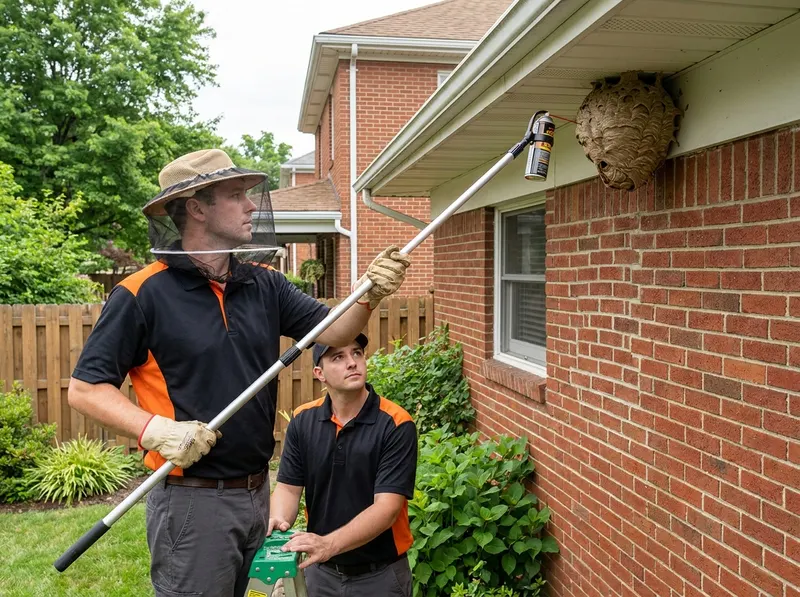
Stinging insect infestations in Pittsburgh frequently exploit the distinct architecture of Allegheny County residences. In historical neighborhoods like Shadyside, Squirrel Hill, and Highland Park, large eaves, decorative wooden cornices, and unsealed soffits on multi-story Victorian and Craftsman homes provide prime void spaces for aggressive German yellowjacket colonies. Further down toward the river valleys in Lawrenceville, Bloomfield, and the South Side Flats, tight rowhouse configurations allow aerial hornets to build undisturbed in narrow breezeways, overhead utility connections, and overgrown backyard tree canopies near Frick Park and Schenley Park. Hillside settlements such as Mount Washington and Brookline regularly host subterranean yellowjacket nests within sloped landscaping and retaining wall fissures, creating hidden foot-traffic hazards for residents and domestic pets.
Immediate intervention separates emergency structural extraction from routine exterior prevention. When yellowjackets establish colonies within drywall voids, brick weep holes, or floor joists, standard consumer perimeter sprays fail to penetrate the core brood chamber, often driving thousands of panicked insects inward through electrical outlets and light fixtures. Professional eradication applies micro-injector dusts directly into the entry aperture, collapsing the colony from the interior without saturating living spaces with indiscriminate chemicals. Ground nests and high-elevation bald-faced hornet structures, often reaching 14 to 24 inches in diameter by late August, require direct pressurized knockdown agents followed by complete mechanical bagging to strip pheromone cues that attract secondary colonies next spring.
Every intervention follows three systematic steps: First, technicians map the primary foraging flight paths around the roofline or foundation to pinpoint hidden satellite openings. Second, direct application of EPA-registered, family- and pet-conscious residual formulations neutralizes the active insect population at the nesting site. Third, after insect activity stops, the physical comb structure is detached, bagged, and removed, followed by an exterior barrier treatment to inhibit recolonization. For properties bordering heavily wooded tracts near East Liberty or the Cathedral of Learning, annual late-spring perimeter sweeps of deck undersides and porch ceilings prevent single overwintered queens from establishing active summer colonies.
Every job gets a firm, written price after a free on-site visit.
Tell us about your stinging insect nest removal job in Pittsburgh and we'll send a clear, written quote, usually the same day.
 Rendivo Exterminators